Haleon
Haleon · 2024-2025 · Health · via Flipside Group
- RoleLead UX/UI Designer
- ImpactBrand setup in S4D cut from 5 days to 2
- Outcome70-brand rollout: 490 → 210 design days
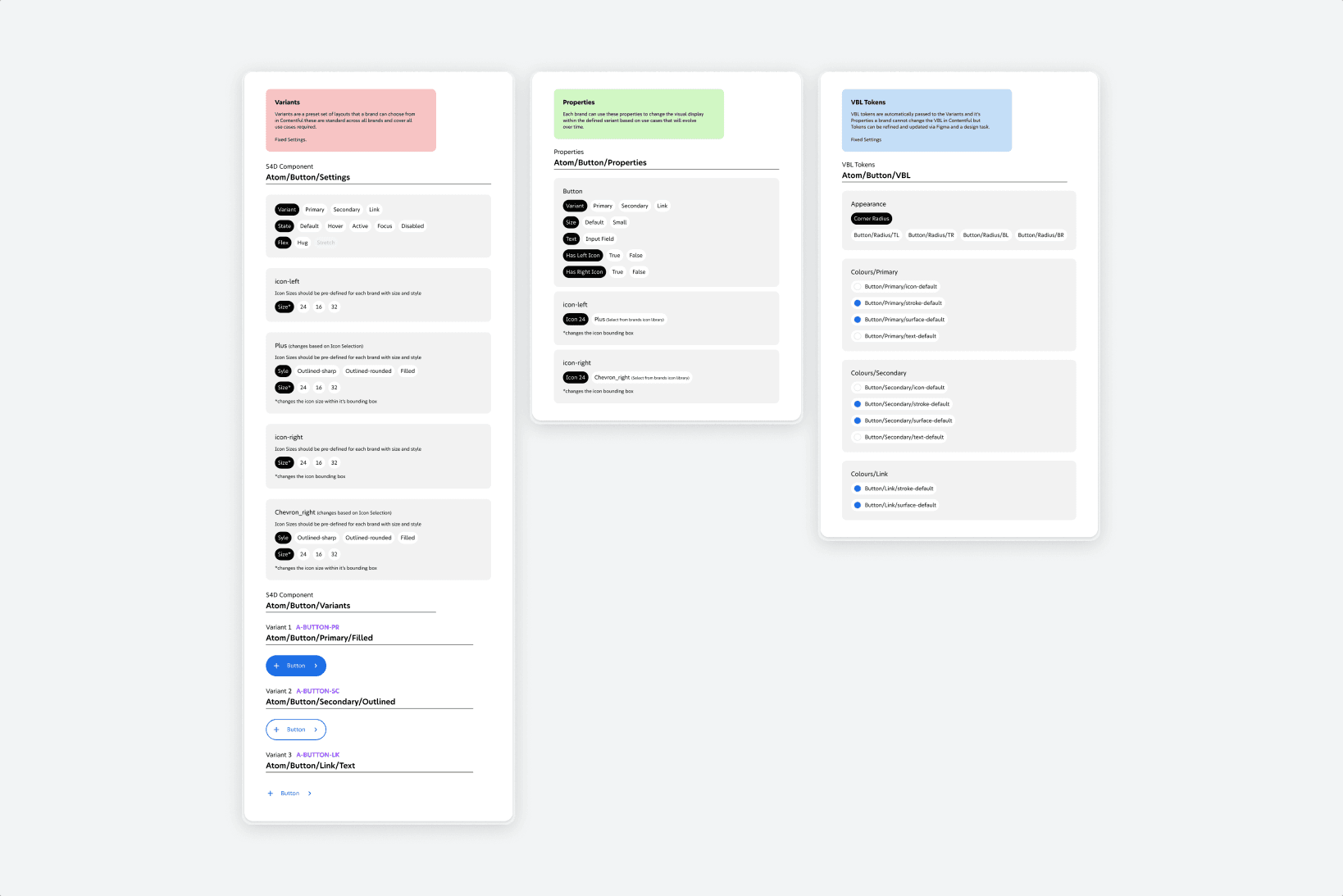
As Lead UX/UI Designer at Flipside on Haleon’s Destination Strategy, I ran the audit, template system, design-token governance and migration toolkit that moved Haleon’s global consumer-health brands onto a single design system: S4D.
Introduction
Haleon runs hundreds of brand websites across many markets, a “matrix of complexities” of uncoordinated strategy, out-of-date “zombie” sites and cost inefficiency. Destination Strategy set out to consolidate that estate into one system, expected to scale to 70+ brands. I sat at Flipside as the connective layer across Publicis, AKQA and Interbrand, and Haleon’s internal team.
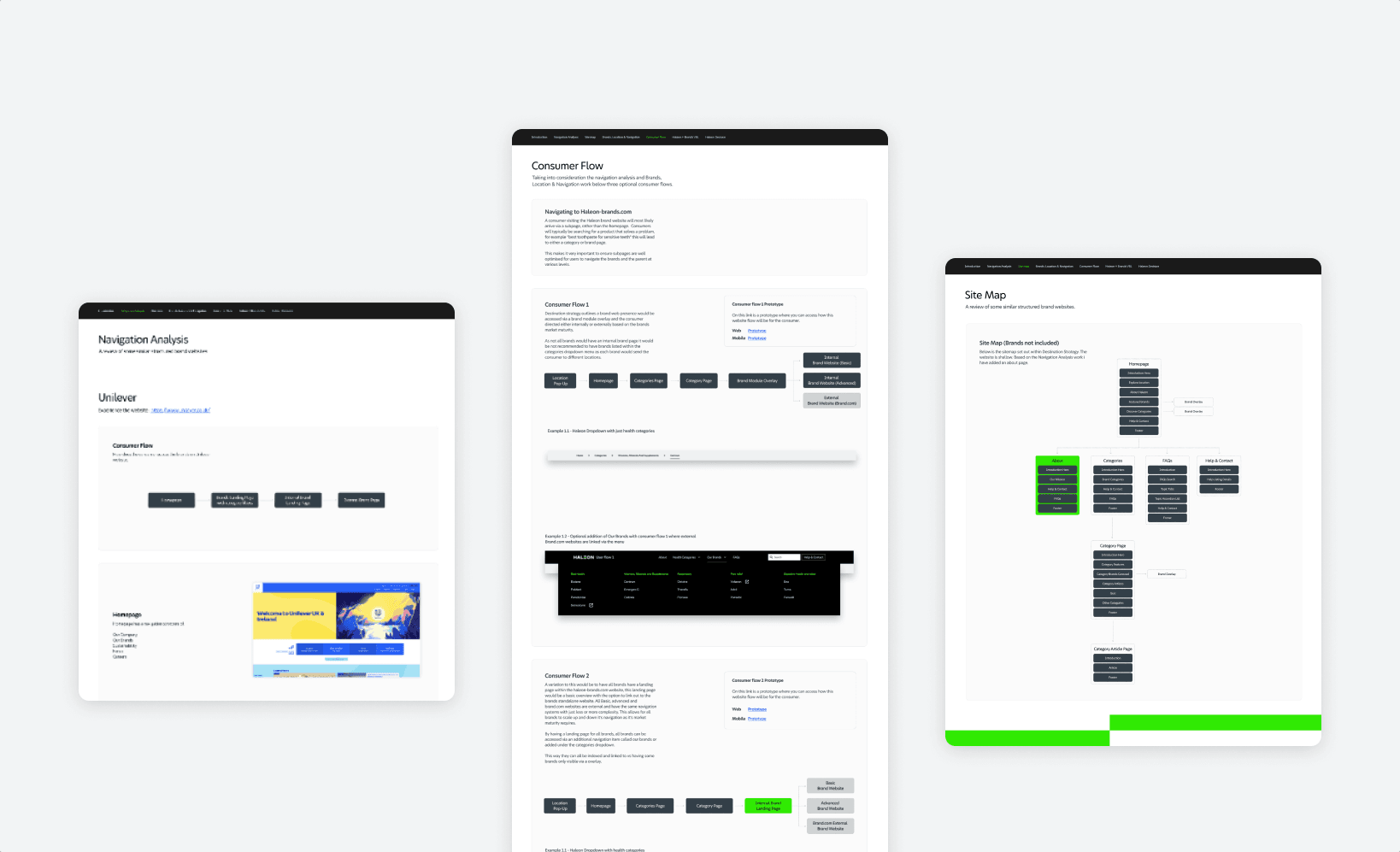
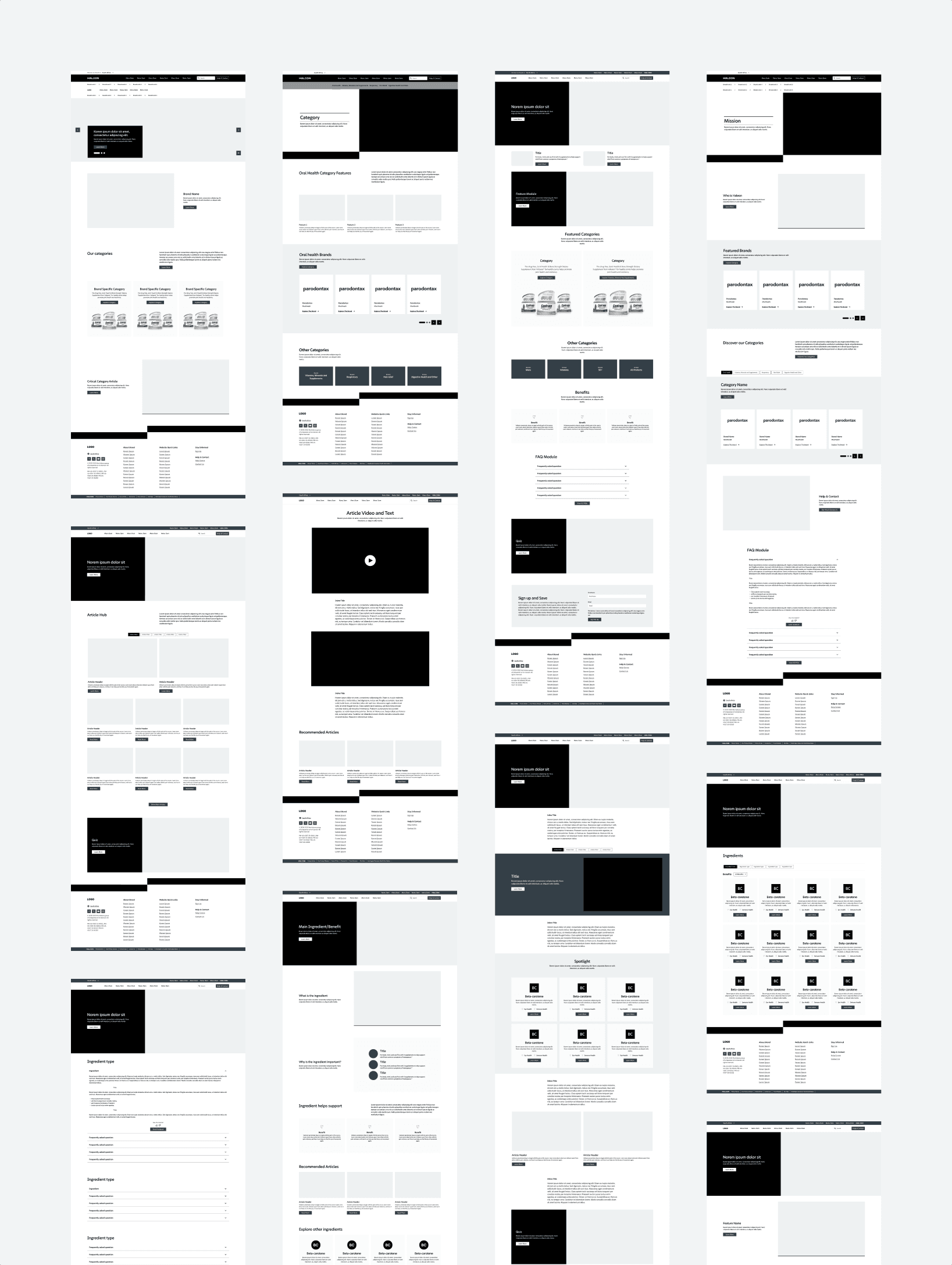
Turn a sprawling website estate into a single source of truth: a persona-driven set of page templates (Destination Strategy) built on a shared Figma design system and token engine (S4D), that brand teams in every market could adopt quickly and then migrate their content onto.
Challenges overcome
The central tension was foundation versus customisation: the workflow “became fragile, with changes being made before a solid foundation was established.” Bespoke builds and an incomplete US user test pulled effort from finishing the base component set. The audit was being misapplied as a build spec; Figma’s token architecture didn’t scale (components bind to variable UUIDs, plus a 40-mode limit); S4D couldn’t hold per-brand design systems, forcing per-brand element toolkits; and four agencies meant genuine ambiguity over ownership and reporting, all under a WCAG 2.2 AA requirement.
Strategic thinking & planning
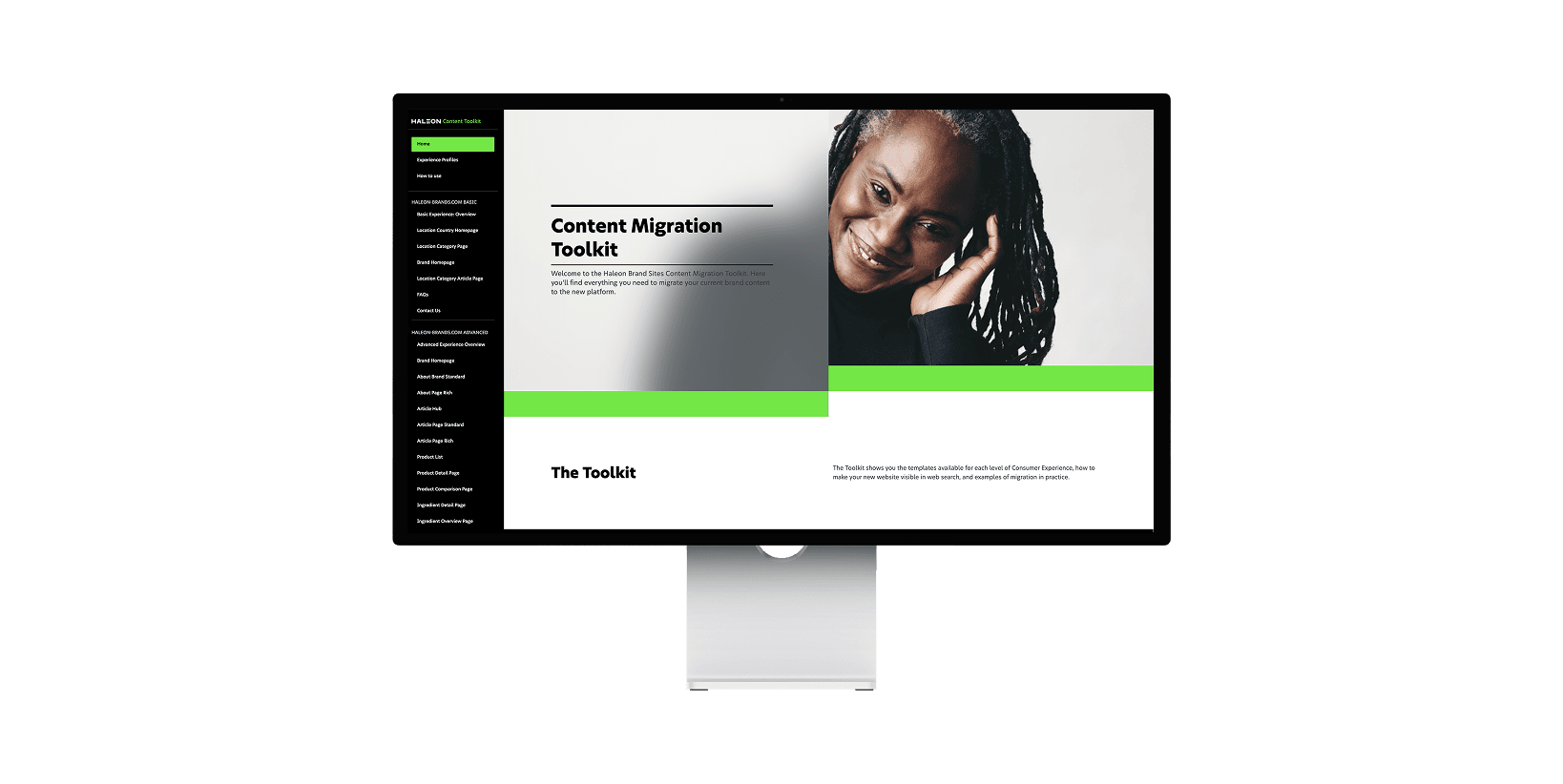
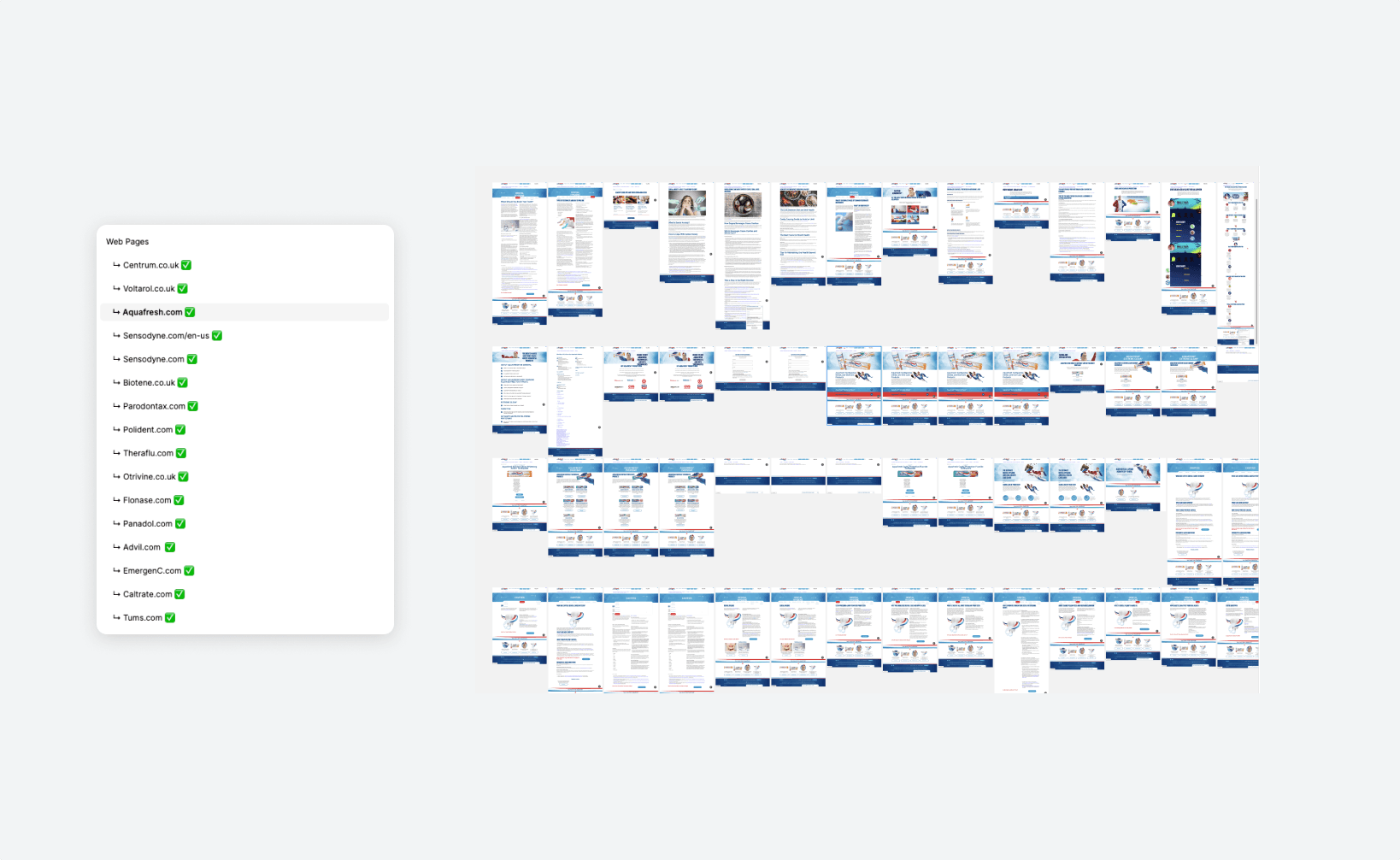
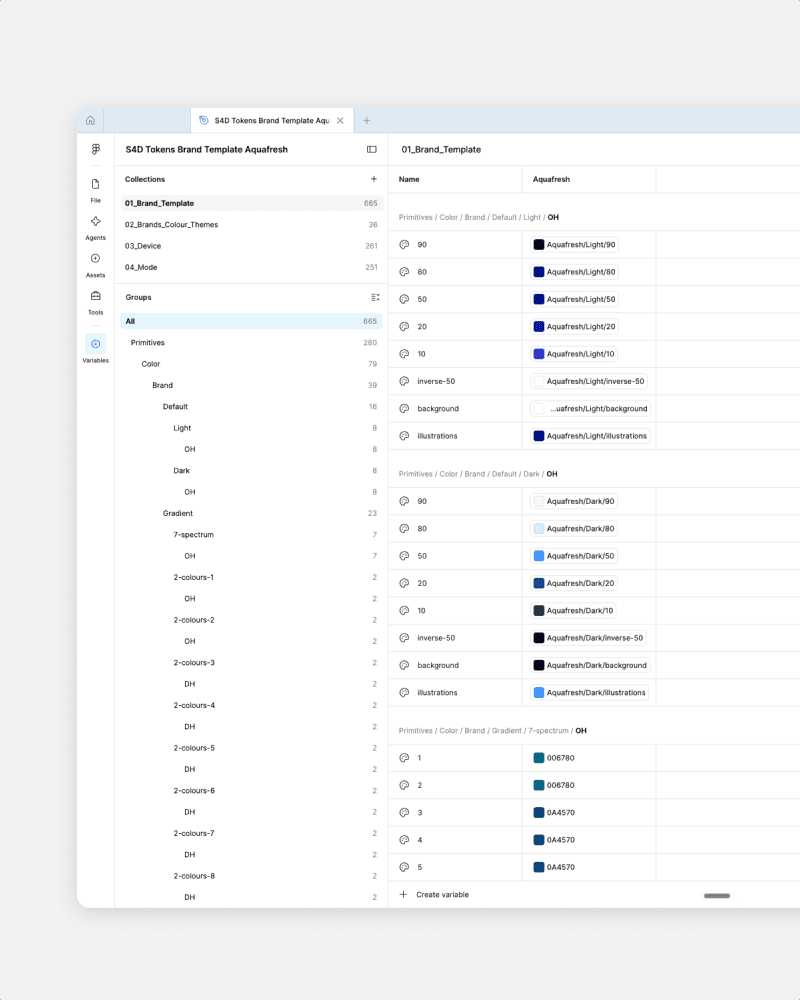
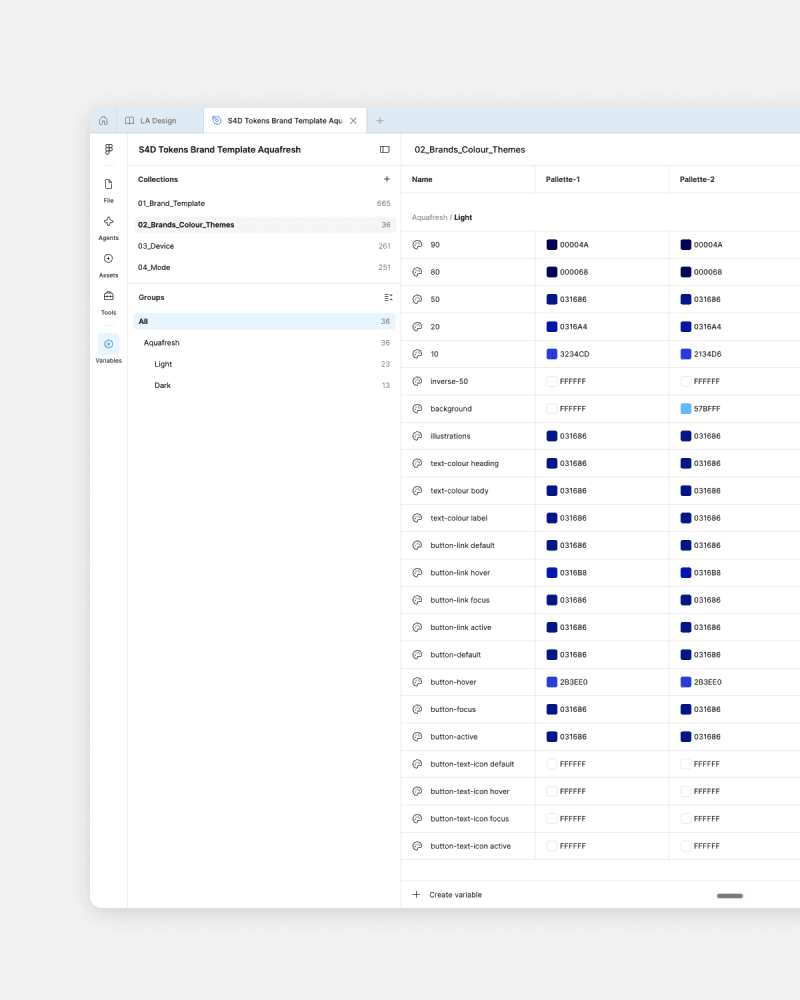
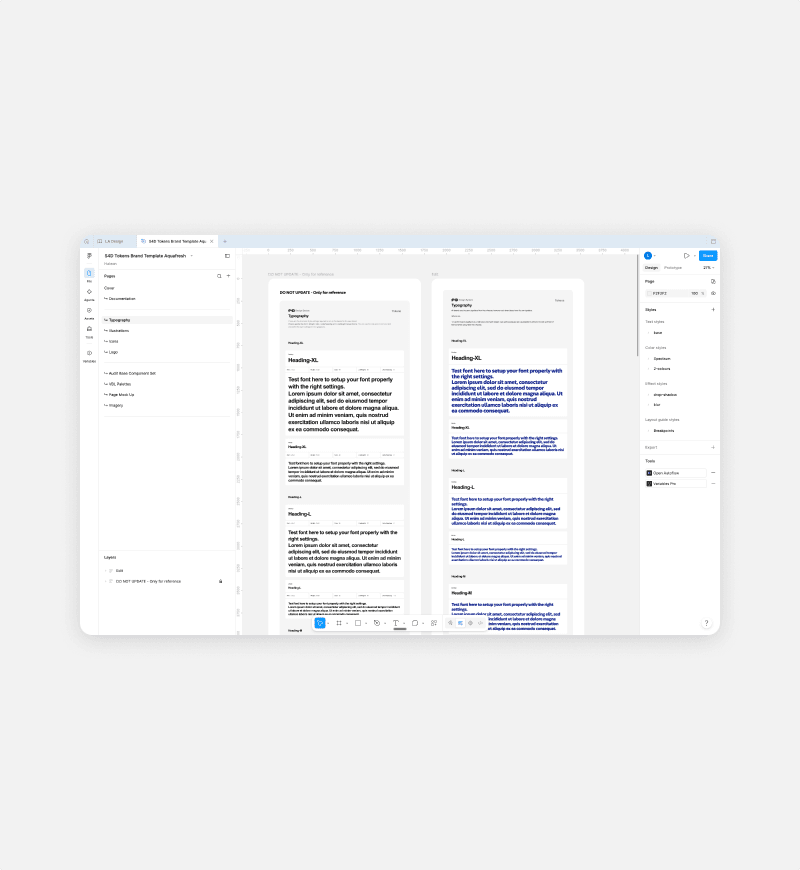
I audited 15 live brand sites in Figma (2,345 pages, 3,988 images and 530 components mapped 1:1 to S4D) on the principle that the audit defines what to build, not how. I set up each brand’s Visual Brand Language as Figma variables on AKQA’s ~628-token baseline, wrote the governance for it, and built the Content Migration Toolkit in Webflow (approved August 2024), plus the handover and onboarding guides that let new team members pick up the system.
Outcomes
The toolkit was approved for build (August 2024) and adopted; Centrum, Voltaren and Huddle were completed first, with a full rollout scheduled across 2025-2026 (Theraflu picked up its own signed statement of work across four markets). The work went through rigorous external review (Interbrand on brand fidelity, and detailed navigation and accessibility critique) and established the audit, templates, token governance and enablement Haleon’s migrations now run on.
Audit defines what to build, not how: the base system was already enough, and over-cataloguing created drift. Freeze the foundation before customising; discipline beats fragile parallelism. Scale demands independence: decentralise brand setup so 70+ brands don’t bottleneck on central tokens. And enablement is half the deliverable: the setup guides and handover are what let a team actually adopt the system.
 View this project in the interactive portfolio →